


Good morning. Halfway through the week. Here is a quick snapshot of what we’re covering:
The government is keeping fare hikes on pause as a last resort, even with global fuel prices spiking and a transport strike looming.
Canberra is handing over a massive, non-payable grant to fuel Philippine renewable energy and digital projects.
Around 1,500 Filipino mariners have invoked their legal right to decline high-risk voyages amid escalating global maritime conflicts.
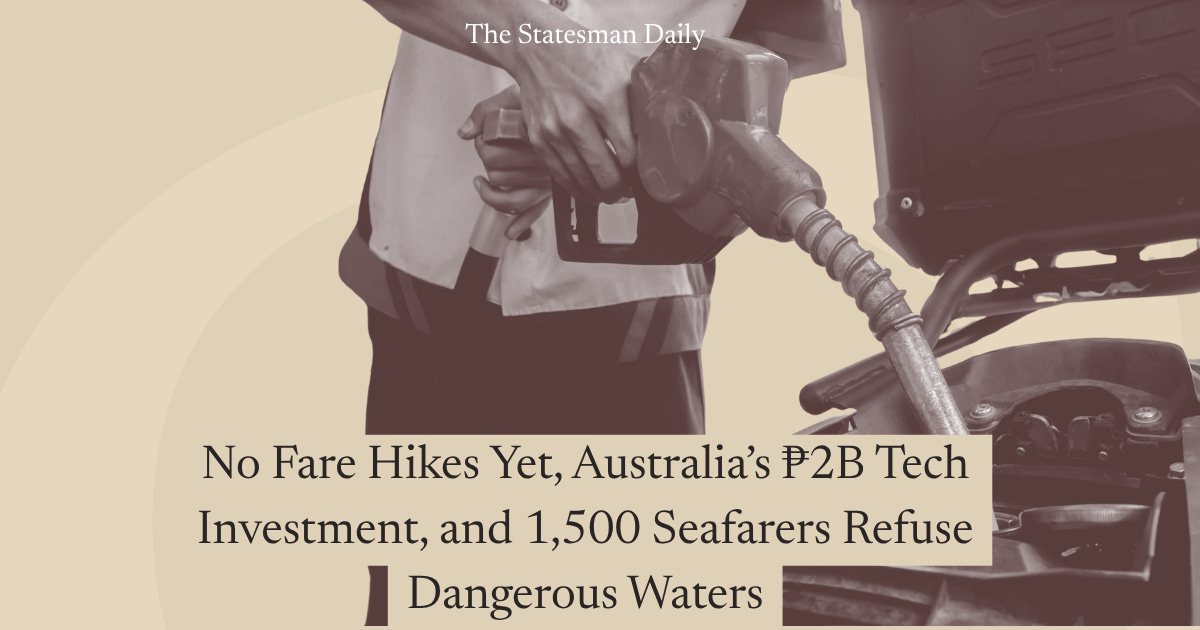
The Ultimate Commuter Staredown
Coverage: Public Transportation & Macroeconomics
If you’ve taken a trip to the gas station lately, then you probably know this. Global oil tensions in the Middle East have pushed pump prices up for weeks, pushing transport groups like Piston to schedule nationwide strikes. Naturally, commuters are bracing for impact, expecting public transit fares to follow suit.
However, the Palace reaffirmed that lifting the fare hike suspension remains an absolute “last resort.” Instead of passing the burden directly to everyday workers, the government is scrambling to offer transport operators targeted relief, think fuel discounts and free toll access for buses. The plot twist? Global oil markets might actually offer some sudden relief. Reports indicate Saudi Arabia is boosting crude shipments, which could trigger an ₱8 per liter drop in diesel very soon. For now, the administration is holding the line to keep everyday travel costs manageable.
Aussie Cash for Clean Energy and Tech
Coverage: International Relations, Foreign Investment & Energy
Australia isn’t just sending us great coffee culture and tourists; they are officially cutting a ₱2 billion direct grant to the Philippines. Courtesy of Canberra’s PROGRESS initiative, this isn’t a loan with sneaky interest rates or repayment term, it’s pure financial backing aimed squarely at green energy and the digital economy.
Finance Secretary Frederick Go and Australian officials are using the fund to boost high-multiplier investments that build modern infrastructure. The target? Generating sustainable jobs and pulling down national unemployment numbers, which recently spiked to a four-year high of six percent. The funds haven’t been dished out just yet, as both nations are currently mapping out high-impact projects. But if you’re operating in the local clean energy or tech startup ecosystem, it’s time to polish those pitch decks, there is serious momentum heading your way.
Safety First on the High Seas
Coverage: Labor, Maritime & Geopolitics
Working on cargo ships has always been tough, but navigating active conflict zones takes it to another level. With volatility spiking around critical maritime corridors like the Strait of Hormuz and the Black Sea, the Department of Migrant Workers (DMW) revealed that around 1,500 Filipino seafarers have exercised their legal right to refuse sailing over the last three years.
Roughly 500 of those refusals happened this year alone, with several Filipino captains actively stepping up to protect their crews from entering high-risk areas. Under official DMW guidelines, crew members who decline these dangerous voyages are protected against blacklisting, entitled to full repatriation, and guaranteed two months’ compensation. As global shipping lanes become increasingly unpredictable, Manila is sending a firm message to international vessel operators: protecting local maritime workers comes way before keeping cargo on schedule.
That’s it again for today. We’ll see you again tommorow. As promised, 5-minutes of your time only.